




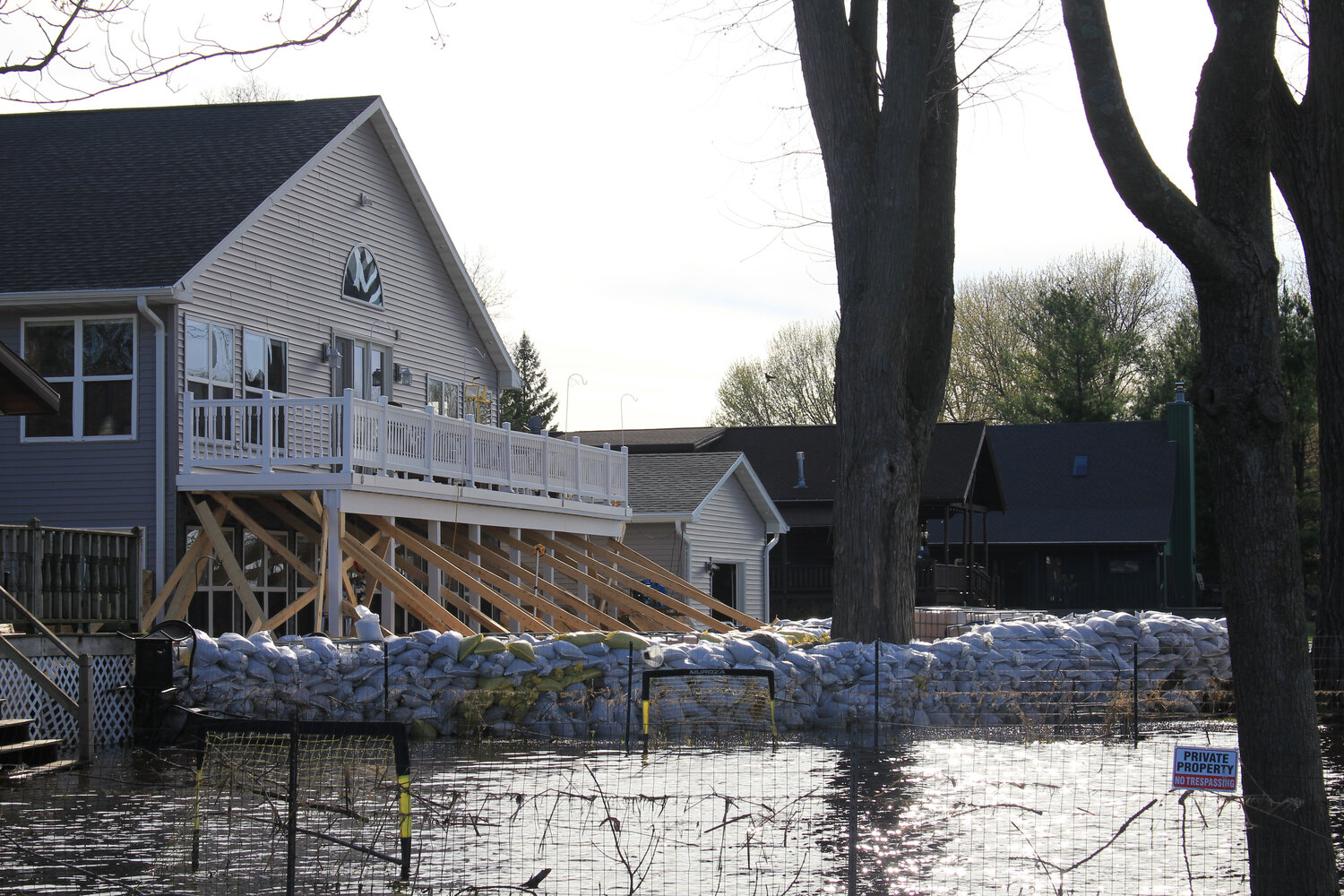
FREMONT – The Waupaca County Department of Public Health (DPH) has released results from free well water tests distributed to residents whose private wells were affected by the historic spring flooding along the Wolf River.
The well water testing effort was launched by DPH after record flooding along the Wolf River in April inundated homes and properties in several communities.
Of the hundreds of free testing kits distributed to impacted residents, about 22% of the submitted kits have returned positive for bacteria contamination.
Health Officer Jed Wohlt said at a Board of Health meeting last month that a primary public health concern following the disaster has been the safety of local drinking water. During the flooding, Wohlt said DPH warned residents not to use their drinking water if floodwaters had surrounded their wells.
When private wells become flooded, bacteria and other harmful organisms can get into the water, according to the Wisconsin Department of Health Services (DHS). The contamination makes the water unsafe for drinking, cooking or preparing food.
During the initial emergency recovery phase, DPH established Multi-Agency Resource Centers in New London and Fremont, providing aid to an estimated 250 to 300 residents. The response included the Red Cross, Salvation Army, local public health and behavioral health departments, the Wisconsin Department of Natural Resources (DNR) and various other support agencies, which distributed resources such as food kits, flood response kits and first aid supplies.
At these centers, officials distributed over 200 free test kits to residents whose wells had been surrounded by floodwaters. The flood test kits test for the presence of coliform and E. coli. According to DHS, total coliform bacteria are an indicator that a well may be vulnerable to contamination, while E. coli bacteria can indicate contamination from human or animal waste.
Wohlt confirmed that some of these tests have returned positive results for contamination. According to Wohlt, the positive test results are heavily concentrated in the hardest-hit communities. Just over 50% of the contaminated wells are located in the Fremont area, while about 49% are in the New London area. The remaining 1% of positive cases are scattered across other affected communities along the river.
Wohlt said DPH has actively followed up with impacted homeowners to provide guidance on well water treatment and issued secondary kits for follow-up testing. The vast majority of the secondary tests have come back negative, he said, meaning the well water is once again safe to drink.
The DNR recommends that residents whose wells were affected by flooding use an alternative source of drinking water until testing confirms the water is safe. The agency also recommends disinfecting flooded wells and conducting follow-up testing if bacteria are detected.
For residents who have yet to verify the safety of their drinking water, DPH has free test kits available for anyone affected by the floods.
“If someone received a test kit and hasn’t tested their drinking water yet, we would encourage them to still collect a sample and submit it for testing,” Wohlt said. “It is not too late and it is better to be sure that your drinking water is safe than to assume it is.”
Beyond private residences, Wohlt said that environmental health staff proactively contacted businesses impacted by flooding along the Wolf River, including restaurants and campgrounds, conducted facility walk-throughs and performed investigative water sampling to ensure the businesses could operate safely.
Wohlt said DPH is also focusing on secondary environmental hazards following the flooding, particularly mold, and is distributing educational materials to guide homeowners on how to safely dry out their properties and handle mold and mildew during the rebuilding process.


Comments
No comments on this item Please log in to comment by clicking here